
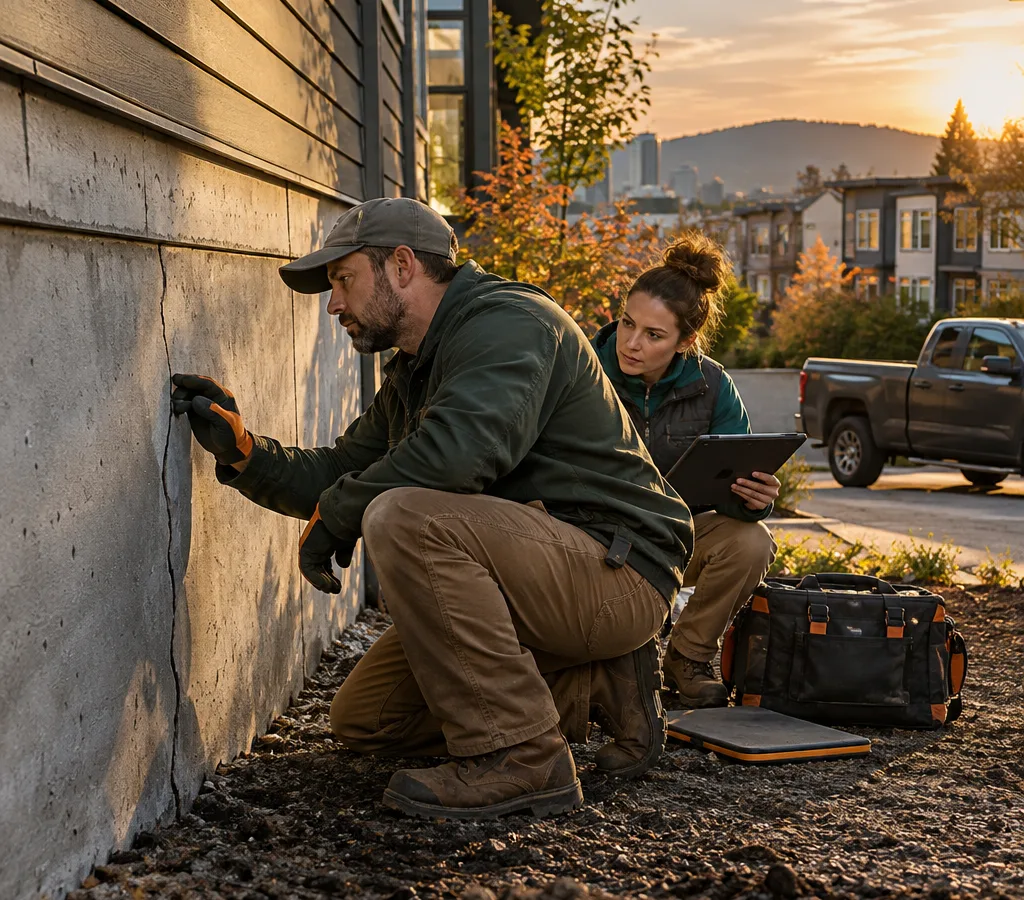
Concrete foundation service in Portland, Oregon
Concrete Foundation Repair in Portland
Get a careful assessment, a repair plan based on the cause of the damage, and workmanship focused on lasting structural stability.
Diagnosis before repair
A Clear Plan for a Stable Foundation
Concrete foundation repair in Portland starts with finding out why the concrete moved, cracked, or allowed water through. A crack may result from shrinkage, settlement, lateral soil pressure, drainage problems, or a combination of conditions. Treating every crack the same can waste money and leave the underlying problem unresolved.
Foundation Contractors Portland evaluates visible damage, adjacent drainage, wall alignment, floor elevations, and other signs of movement before recommending work. During the evaluation, Portland's trusted foundation contractors team explains what appears structural, what may be related to moisture, and which conditions should be monitored rather than repaired immediately. The goal is a written scope that connects each recommended method to an observed condition.
Portland's wet months make water management especially relevant. Saturated soil can increase pressure against below-grade walls, while roof runoff placed near the footing can keep the surrounding ground wet. Repair planning may therefore include crack treatment or structural stabilization along with practical drainage corrections. Cosmetic patching alone is rarely a sound answer when movement or recurring leakage is still active.
Inspection signals
Signs That Deserve a Professional Assessment
A single narrow crack does not automatically mean a foundation is failing. Concrete commonly develops shrinkage cracks as it cures. The pattern, orientation, width, displacement, and change over time provide more useful information than the presence of a crack by itself.
Schedule an assessment when you notice a horizontal wall crack, stair-step cracking in masonry near the foundation, a crack that is widening, inward wall movement, uneven floors, or doors and windows that have recently begun sticking. Water entering through a wall crack, white mineral deposits, damp basement edges, and recurring musty conditions also merit attention. These symptoms can indicate a crack path, hydrostatic pressure, or poor control of surface water.
Older houses in neighborhoods such as Sellwood-Moreland and Irvington may have foundation systems built under earlier construction practices, so access, concrete condition, and previous alterations must be considered before work begins. In the West Hills, sloping lots make drainage paths and grade changes especially important to the assessment. The repair should fit the actual structure and site rather than a standard package.

Methods matched to conditions
Concrete Foundation Repair Portland Methods
Crack Injection
Epoxy injection can bond suitable, dry structural cracks, while polyurethane injection is commonly used to seal certain leaking cracks because the material can expand within the crack path. Product choice depends on the crack and the repair objective.
Wall Stabilization
Walls with confirmed inward movement may require engineered reinforcement such as steel supports or carbon-fiber straps. The amount of movement, wall construction, access, and structural loads determine whether a system is suitable.
Settlement Repair
Where verified settlement has affected the footing, underpinning may transfer loads to more competent bearing material. Pier type, placement, and capacity should follow site conditions and the structural design.
Concrete Restoration
Loose or deteriorated concrete is removed until sound material is reached. The repair area is prepared and rebuilt with a compatible cementitious repair material, with exposed reinforcing steel addressed when present.
Water Management
Extensions at downspouts, corrected grading, drainage improvements, and joint sealing may reduce water reaching the foundation. Drainage work supports a repair when moisture is contributing to pressure or leakage.
Monitoring and Documentation
Some conditions warrant measured monitoring before major work. Baseline crack dimensions, elevation readings, photographs, and dated observations can show whether movement is active or stable.
From inspection to closeout
How the Repair Process Works
-
Step01
Inspect the Structure and Site
The assessment covers crack patterns, wall position, accessible footings, floor level changes, drainage, grading, and signs of prior repair. Interior symptoms are compared with exterior conditions.
-
Step02
Identify the Likely Cause
Findings are separated into shrinkage, water intrusion, localized concrete deterioration, settlement, or lateral wall movement. If structural calculations or a stamped design are appropriate, that need should be identified before construction.
-
Step03
Define the Scope
The proposed scope states which areas will be repaired, what method and materials will be used, how access and protection will be handled, and whether excavation, drainage work, or permits may be required.
-
Step04
Complete and Review the Work
The crew prepares the work area, completes the specified repair, and reviews the finished installation. Any monitoring points, curing requirements, drainage maintenance, or follow-up observations are explained before closeout.
Project budget guidance
How Much Does Concrete Foundation Repair Cost in Portland?
Concrete foundation repair in Portland typically ranges from about $700 to $3,000 for limited crack repairs, while structural stabilization or underpinning commonly runs from several thousand dollars to $25,000 or more. These are general planning ranges, not quotes.
Final cost depends on the cause and extent of movement, foundation type, excavation depth, access, engineering needs, permit requirements, drainage work, and the number of stabilization points. A repair affecting one accessible wall differs greatly from work beneath a settled portion of a house. Exact cost is confirmed after an on-site assessment and written scope.

Local site conditions
Repair Decisions Built Around Portland Conditions
Western Oregon's extended rainy periods can expose weaknesses in grading, downspout discharge, and below-grade drainage. A repair assessment should trace where roof and surface water travel, particularly when leakage appears after sustained rain. Water entry does not always indicate structural movement, but recurring moisture can damage finishes and complicate the use of a basement or crawlspace.
Conditions also vary across the city. Eastmoreland has many established homes where mature trees and older drainage layouts may need to be considered without assuming that roots caused the damage. St. Johns includes properties of different ages and foundation types, making identification of the actual wall and footing construction an early step. On any sloped property, excavation access and control of uphill runoff can materially affect the scope.
Permit needs depend on the work. Structural alterations and substantial foundation work may require review by the City of Portland Bureau of Development Services. A good proposal identifies likely permit and engineering responsibilities instead of leaving those questions until construction is underway.
Assess before conditions change
Document the Evidence Before It Is Covered
Get the crack pattern, drainage conditions, and structural symptoms assessed before damage spreads or interior improvements conceal the evidence.
Homeowner planning answers
Concrete Foundation Repair Questions
How do I know whether a foundation crack is structural?
Crack direction, displacement, width, location, and change over time determine whether structural repair may be needed. Horizontal cracking, inward wall movement, widening cracks, and related floor or opening changes deserve prompt evaluation. A narrow, stable shrinkage crack may need sealing or monitoring instead. Portland rain can also reveal a crack as a water path even when significant movement is not present.
Can foundation cracks be repaired from inside the basement?
Some poured-concrete wall cracks can be injected from the interior when the full crack is accessible and the wall condition is suitable. Epoxy may be selected to bond certain structural cracks, while polyurethane is often used for active leakage. Exterior excavation may be needed when the outside waterproofing, drainage, or wall surface must be addressed.
Will foundation repair stop basement water intrusion?
Foundation repair can stop water entering through a treated crack, but it will not correct every source of basement moisture. Water may also enter at joints, penetrations, window wells, or the wall-floor connection. During Portland's wet season, downspout discharge and surface grading should be assessed with the concrete so the repair addresses the likely water path.
How long does concrete foundation repair take?
A limited crack repair may be completed in a day, while stabilization, excavation, or underpinning can take several days or longer. Engineering, permit review, utility location, access limitations, and curing requirements may extend the schedule. The written scope should separate active work time from approval and material lead time.
Do I need an engineer for foundation repair in Portland?
An engineer may be needed when the work changes structural support, addresses substantial movement, or requires calculations and drawings for permit review. Minor crack sealing does not always require engineering. The observed damage and proposed method determine the need, and structural work may also require review by Portland's Bureau of Development Services.
Should I repair the foundation before selling or remodeling?
Active movement, significant cracking, or recurring leakage should be assessed before a sale or major interior remodel. Repairs can affect framing, floor levels, basement finishes, and disclosure documents. Completing the assessment first also reduces the risk of covering evidence that a contractor or engineer needs to inspect.
Can foundation work be done during Portland's rainy months?
Many interior repairs and some stabilization work can proceed during rainy months, but excavation, coatings, and cementitious materials may require suitable site and weather conditions. Wet soil can also affect access and excavation safety. Scheduling depends on the method, manufacturer requirements, and the ability to keep the work area properly prepared.
Get a Clear Foundation Repair Plan
Tell Foundation Contractors Portland what you have noticed, including cracks, water entry, uneven floors, or recent changes. We will help you move toward an on-site assessment and a written scope based on the condition of your property.